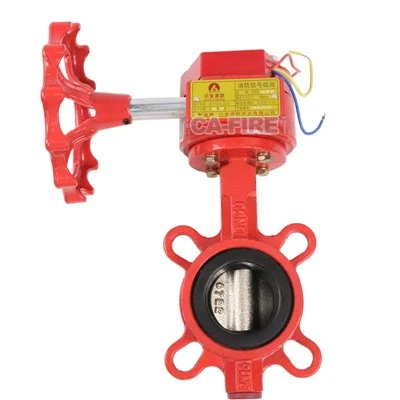


Dry Pipe Alarm Valve
ZSFC Series dry pipe alarm valve for sprinkler systems.
Available in DN100, DN150 and DN200 sizes.
Pneumatic control keeps downstream piping charged with compressed air.
Automatically admits water when system air pressure drops.
Suitable for warehouses, garages and cold storage areas.
Description
Ca-Fire Protection Co.,Ltd is one of the most credible manufacturers and suppliers of dry pipe alarm valve in China. Welcome to wholesale custom made fire equipment products at competitive price from our factory. Contact us for more cheap products.
Products Description
The core control valve of a dry pipe sprinkler system. The ZSFC Series maintains compressed air in the sprinkler piping to keep the system dry under normal conditions. When a sprinkler operates and system air pressure drops, the valve trips automatically, allowing water to enter the piping and activating the alarm. An optional accelerator can help shorten valve trip time in larger or longer dry pipe systems. Available in DN100, DN150 and DN200 sizes for warehouses, parking structures, cold storage facilities and other areas where freezing conditions may occur.
1.6 MPa Working pressure
6.4 MPa Strength test
Pneumatic Control method

SEQUENCE
Piping stays charged
Compressed air fills the system side, held in a fixed ratio against water supply pressure to keep the clapper seated.
01
A sprinkler opens
Heat from a fire opens a sprinkler head, and air begins escaping from the piping, so system pressure starts to fall.
02
Pressure drop is sensed
Once air pressure drops below the preset threshold - or falls faster than 0.07 MPa with an accelerator fitted - the valve is released.
03
Water flows and alarms
The clapper opens, water floods the piping toward the open head, and the flow trips the alarm simultaneously.
04
COMPONENTS

Dry Pipe Alarm Valve
Cast body rated for dry-pipe service, with an integrated pressure gauge, test and drain trim, and a mechanical alarm that sounds the moment water begins to flow - no electrical supply required to raise the alert.
Accelerator
Mounted on the system-side piping, the accelerator senses a rapid pressure drop and vents it straight to the intermediate chamber of the alarm valve, cutting the time between a sprinkler opening and water arriving.

SPECIFICATIONS
| Model / size | DN100 | DN150 | DN200 |
|---|---|---|---|
| Height (mm) | 375 | 455 | 610 |
| Working pressure | 1.6 MPa | ||
| Seal test pressure | 3.2 MPa | ||
| Strength test pressure | 6.4 MPa | ||
| Control method | Pneumatic | ||
Selection Guide
| Selection Factor | What to Check |
|---|---|
| Valve Size | Match the DN size with the system riser |
| System Type | Confirm it is designed for a dry pipe system |
| Pipe Network | Consider pipe length and configuration |
| Operating Conditions | Check whether freezing conditions may occur |
| Accelerator | Consider if faster valve operation is required |
| System Design | Confirm selection with hydraulic calculations |
FAQ
Q: What's the difference between a dry pipe valve and a wet pipe (alarm check) valve?
A: A wet pipe system keeps the downstream piping filled with water at all times. A dry pipe valve instead holds the piping charged with compressed air, so it's the right choice for spaces that can freeze - unheated warehouses, parking structures, loading docks and cold storage - where standing water in the pipe would be a risk.
Q: Do I need the accelerator, or is the valve fine on its own?
A: The valve trips on its own once air pressure drops below the preset threshold. The accelerator is an add-on for systems with longer or larger-diameter dry piping, where trip time matters most: it senses a fast pressure drop (greater than 0.07 MPa) and vents it straight to the valve's intermediate chamber, cutting the delay between a sprinkler opening and water arriving.
Q: How do I choose between DN100, DN150 and DN200?
A: Sizing follows the hydraulic demand and pipe diameter of the riser it's installed on, not the size of the room. Match the valve DN to the riser it's replacing or feeding, and confirm the selection against the hydraulic calculation for that zone rather than by height or floor area alone.
Q: Does the alarm need electrical power to operate?
A: No. The alarm is mechanical: the same water flow that opens the valve also drives the alarm, so it sounds even if power to the building has been lost. Electrical supervision or a pressure switch can be added on top for remote monitoring, but it isn't required for the local alarm to work.
Q: What routine maintenance does the valve need?
A: Dry pipe valves are typically trip-tested and internally inspected on the schedule set by the applicable fire code and the manufacturer's instructions, with the air compressor and low-air alarm checked more frequently. Always confirm the specific interval against the current product manual and local code rather than a general rule of thumb.
Our address
NO.8, YUANFENG ROAD, MEIYUAN VILLAGE, KANGMEI TOWN, NANAN CITY, QUANZHOU CITY, FUJIAN CHINA

Hot Tags: dry pipe alarm valve, China dry pipe alarm valve manufacturers, suppliers, factory
Send Inquiry
You Might Also Like