


Fire-latching Swing Check Valve
The fire-latching check valve is not an "optional accessory", but a "safety cornerstone" of the fire water supply system. Hidden deep within the pipeline, it determines the success or failure of fire fighting; with a simple structure, it bears the life line of the entire building. Only by understanding its safety code and strictly following the installation and maintenance standards can this "invisible goalkeeper" truly safeguard the bottom line of urban fire safety.
Description
Ca-Fire Protection Co.,Ltd is one of the most credible manufacturers and suppliers of fire-latching swing check valve in China. Welcome to wholesale custom made fire equipment products at competitive price from our factory. Contact us for more cheap products.
Products Description
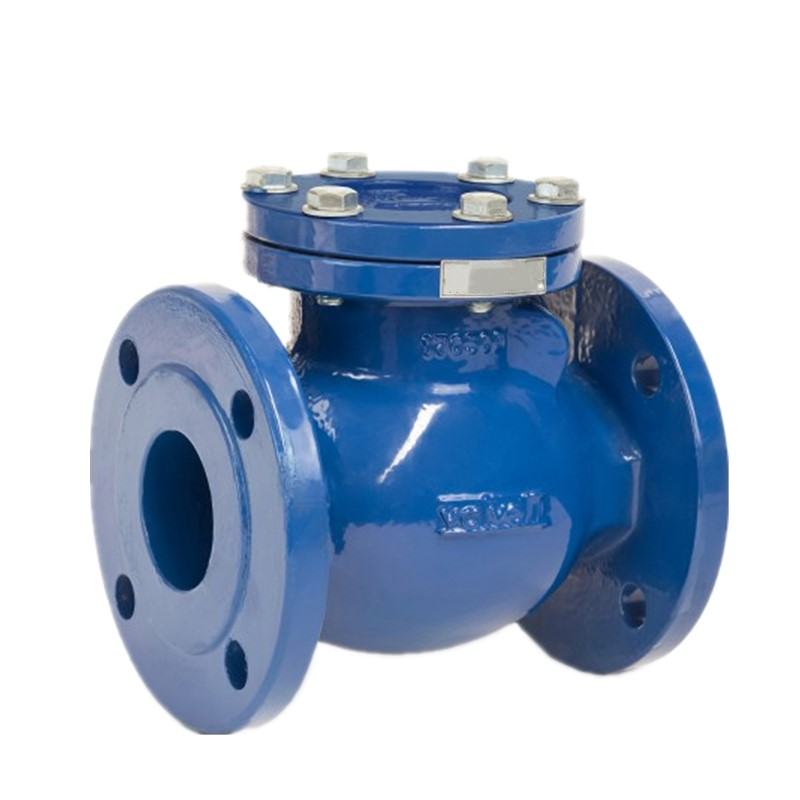
CA-FIRE fire-latching swing check valve
The fire-latching check valve is not an "optional accessory", but a "safety cornerstone" of the fire water supply system. Hidden deep within the pipeline, it determines the success or failure of fire fighting; with a simple structure, it bears the life line of the entire building. Only by understanding its safety code and strictly following the installation and maintenance standards can this "invisible goalkeeper" truly safeguard the bottom line of urban fire safety.
At the fire-fighting scene of a certain old residential area in 2024, as soon as the firefighters started the water pump, they noticed that the water pressure from the fire hydrant on the upper floors suddenly dropped. After further investigation, it was found that the flap of the swing-type check valve on the outlet pipe of the fire pump was stuck by rust debris, causing the pump to stop and water to flow back. As a result, the pressure in the pipeline suddenly "collapsed". This seemingly minor valve failure almost brought the entire building's fire water supply system to a standstill. In the modern fire-fighting system, the swing-type check valve is precisely such a "invisible goalkeeper". Its reliable operation is the fundamental guarantee for "water extinguishing the fire" during fire fighting.
More than just a "one-way valve"
Many people consider fire swing-type check valves to be the same as ordinary industrial check valves. However, in fact, they are specially designed for the extreme conditions of fire water supply systems. Compared to industrial valves, it has three core differences:
mpact-resistant redundant design**: When the fire pump starts, the pipe network pressure will experience a 2-3 times instantaneous shock. The valve disc hinge of the fire-specific valve is made of thickened cast steel, which can withstand repeated impacts without deformation;
Optimized low head loss**: The fire system requires a large flow of water supply. The flow path of the swing-type structure has been optimized in terms of hydraulics, with the resistance coefficient being only 60% of that of ordinary check valves, which can reduce the energy consumption of the pump and ensure stable water pressure at the end;
Fire-resistant sealing technology**: The sealing surface of the valve disc is made of a composite material of high-temperature-resistant rubber and metal. It can maintain sealing performance even in the high-temperature environment of a fire scene, avoiding water backflow due to sealing failure.
Safety Tips for Installation and Maintenance
In actual operation and maintenance, 80% of stop valve failures are caused by incorrect installation and neglect of maintenance. Three major misconceptions need to be particularly avoided:
1: Inverted Valve Disc: Some construction workers install the valve upside down to save space, causing the valve disc to fail to close completely due to its own weight and resulting in continuous leakage. The standard clearly stipulates that when installed horizontally, the hinge of the valve disc must face upwards, and when installed vertically, the direction of water flow must be upwards.
2: Ignoring Aging of Sealing Materials: The rubber gasket on the valve disc's sealing surface will age over time in a humid environment. If not replaced regularly, it will lead to a failure of the seal. It is recommended to replace the sealing gasket every 1-2 years and conduct a water pressure seal test once a year.
3: Not Cleaning Internal Impurities for Long Periods**: Rust, sand, and other impurities in the fire protection pipeline tend to accumulate between the valve disc and the valve body, causing the valve disc to become stuck. The valve should be disassembled once every six months to clean the internal impurities and ensure smooth rotation of the valve disc.
FAQ
Q1: What types of fires is this deluge valve suitable for?
A1: It is specifically designed for Class A (solid materials) and Class B (flammable liquids) fires, making it effective in environments like factories, storage facilities, and chemical plants.
Q2: Can the valve be customized with our brand logo or packaging?
A2: Yes, CA-Fire offers customization options for logos, packaging, and graphics with a minimum order quantity of 2,000 units.
Q3: What is the lead time for orders?
A3: For orders of 1-100 units, the lead time is 35 days. For quantities over 100 units, lead times are negotiable based on production schedules.
Q4: Are there any certifications to ensure product quality?
A4: The valve holds CCC (China Compulsory Certification) and ISO certifications, with additional compliance verified through strict sealing, strength, and performance testing.
How is it different from the previous K5.6 drain valve?The drain valve is for pipeline drainage,testing and freeze prevention; this swing check valve focuses on backflow prevention-core functions are completely unrelated. The drain valve controls fluid discharge, while this valve ensures fluid flows only in one direction, protecting the fire system's water/foam source.
Why choose ductile iron over steel or plastic?Ductile iron balances strength,corrosion resistance and cost-stronger than plastic (avoids cracking under pressure) and more corrosion-resistant than ordinary steel (no rust in humid environments). It's the most cost-effective material for mid-to-large fire pipeline valves.
Can it be installed vertically?Yes, but horizontal installation is recommended for optimal performance (the swing closure opens/closes more smoothly with gravity assistance). If vertical installation is necessary, ensure the flow direction is upward to avoid closure jamming.
What maintenance is required?Annual inspection: ① Check the flange seals for leakage (replace if hardened or damaged); ② Verify the swing closure moves freely (remove debris if stuck); ③ Touch up the blue coating if scratched to prevent corrosion-no other regular maintenance is needed.
Our address
NO.8, YUANFENG ROAD, MEIYUAN VILLAGE, KANGMEI TOWN, NANAN CITY, QUANZHOU CITY, FUJIAN CHINA
Phone Number
+86 15880910562
sales7@ca-fire.com

Hot Tags: fire-latching swing check valve, China fire-latching swing check valve manufacturers, suppliers, factory, Ductile Iron Flange End Swing Check Valve, Check Valves
Send Inquiry
You Might Also Like


