

AI-Driven Detection And Unified Command: The New Frontline in Wildfire Prevention And Emergency Response
Leave a message
AI-Driven Detection and Unified Command: The New Frontline in Wildfire Prevention and Emergency Response
Wildfire Response | June 2025 | CA-FIRE Editorial Team | 6 min read
As global wildfire seasons grow longer and more destructive, fire authorities and technology partners are deploying integrated systems that combine real-time sensing, predictive analytics, and cross-agency coordination to reduce response times and save lives.
Early Detection: From Watchtowers to Neural Networks
Wildfires are no longer a seasonal phenomenon confined to a handful of high-risk regions. Climate-driven shifts in temperature, precipitation patterns, and vegetation dryness have extended the fire season to near year-round conditions across large swaths of North America, Southern Europe, and Australia. In response, the global fire management industry is undergoing a profound technological and organizational transformation - one that places early detection, predictive risk modeling, and streamlined incident command at the center of every modern suppression strategy.
For decades, the primary tools of wildfire detection were human lookouts, ground patrols, and satellite imagery with update cycles measured in hours. Today, a growing number of jurisdictions are deploying high-definition pan-tilt-zoom camera networks integrated with computer vision algorithms capable of identifying smoke columns within seconds of ignition. Systems such as AlertCalifornia - a network exceeding 1,000 cameras across the state - feed continuous video streams into AI models that can distinguish wildfire smoke from dust, fog, or industrial emissions with increasing accuracy.
Complementing optical systems, sensor arrays measuring atmospheric conditions - including fine particulate matter (PM2.5), relative humidity, wind speed, and ambient temperature - are being embedded in high-risk forested zones. When sensor readings cross predefined thresholds, automated alerts are dispatched directly to dispatch centers and incident commanders' mobile devices, shaving critical minutes off the initial attack window. In fixed installations, fire sprinkler systems and deluge systems integrated with these sensor networks can trigger automatic suppression responses before human intervention is even required.
Industry research indicates that wildfires detected and engaged within the first 10 minutes of ignition have a suppression success rate exceeding 90%. Every additional 30-minute delay can increase the burned area by an order of magnitude under high-wind conditions.
Predictive Analytics and Risk Mapping
Prevention increasingly relies on fire behavior modeling platforms that ingest weather forecasts, fuel moisture data, topographic maps, and historical ignition records to generate probabilistic risk maps updated multiple times daily. Fire weather watch systems - operated by national meteorological agencies in partnership with forestry departments - now provide 72-hour outlook products that allow pre-positioning of aerial and ground resources in likely ignition corridors before conditions peak.
Machine learning models trained on decades of satellite burn data are being used to identify structural vulnerabilities in the wildland-urban interface (WUI), helping municipalities prioritize defensible space enforcement, controlled burn scheduling, and evacuation route hardening. A key component of WUI protection is the pre-installation of certified fire hydrant systems and reliable fire hose infrastructure in at-risk communities, ensuring water supply is accessible the moment ground crews arrive on scene. Several counties in California and New South Wales have begun integrating these outputs into official community risk assessments.
Unified Command and Cross-Agency Coordination
Large-scale wildfires routinely overwhelm single-agency capacity, necessitating rapid mobilization of mutual aid from neighboring jurisdictions, national guard assets, and private sector contractors. The adoption of the Incident Command System (ICS) and National Incident Management System (NIMS) frameworks has standardized command structures across agencies, but effective execution still hinges on interoperable communication and shared situational awareness.
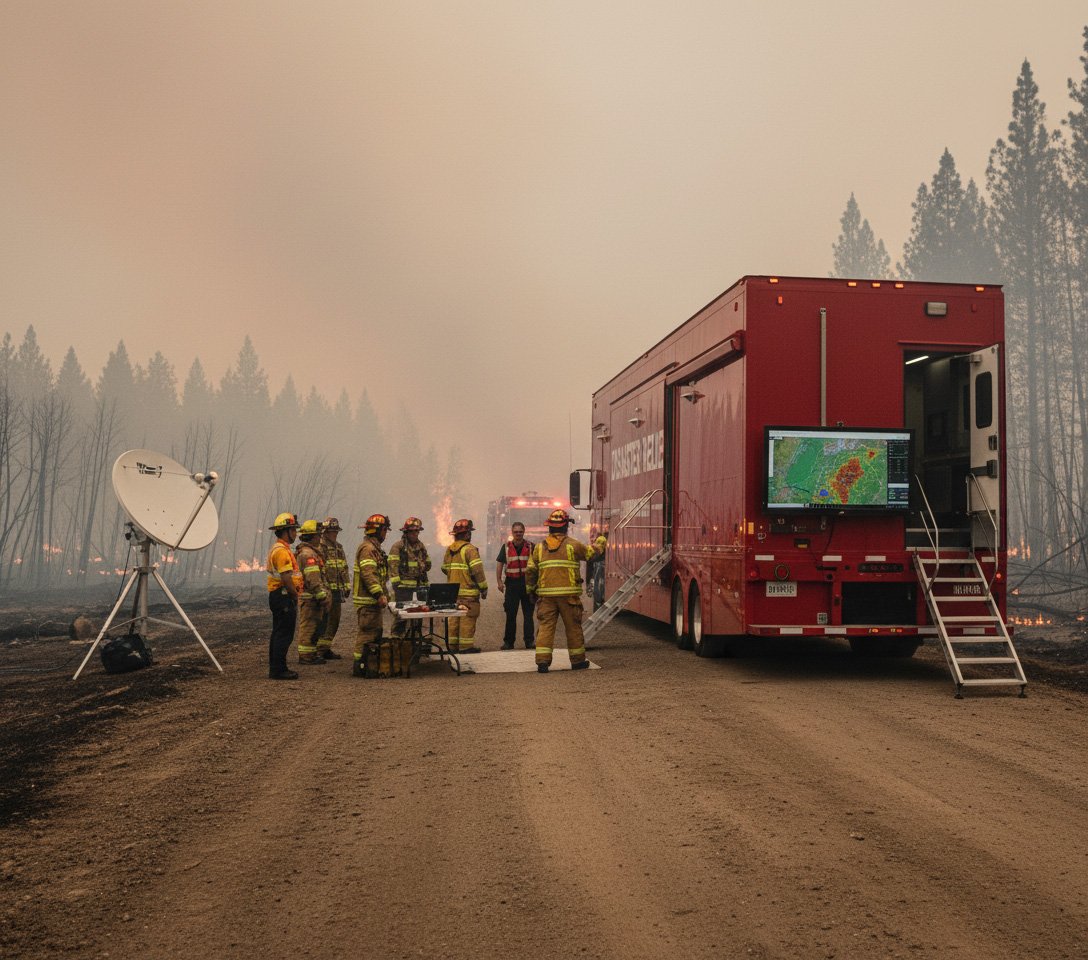
Next-generation incident management software platforms are enabling unified command teams to track resource deployment in real time via GIS dashboards, share digital situation reports across organizational boundaries, and coordinate air traffic deconfliction between helicopters, fixed-wing tankers, and unmanned aerial vehicles (UAVs) operating in the same airspace. Field units equipped with ruggedized tablets can receive updated fire perimeter maps, weather guidance, and evacuation orders without breaking deployment rhythm. Ground suppression teams rely on dependable fire hose couplings and fire nozzles to maintain high-volume water delivery under extreme field conditions.
The Role of UAVs, Aerial Assets, and Ground Suppression Systems
Unmanned aerial vehicles have moved from experimental tools to operational necessities in the suppression toolkit. Long-endurance drones equipped with thermal infrared cameras provide continuous monitoring of active fire perimeters and can identify hidden hot spots that ground crews might miss in heavy smoke. Some agencies are piloting autonomous drone swarms for simultaneous multi-sector surveillance, significantly expanding situational awareness without proportional increases in personnel deployment.
Meanwhile, next-generation very large air tankers (VLATs) capable of delivering over 19,000 liters of retardant per drop work in concert with ground-based fire monitors - high-capacity water cannon systems that can project powerful streams into inaccessible terrain or protect critical infrastructure at close range. For industrial and petrochemical sites where wildfire risk intersects with explosion hazard, anti-explosion fire monitors provide a specialized solution engineered for the harshest operating environments. Where accelerant-fueled fires are involved, foam systems - including foam bladder tanks and foam inductors - deliver the smothering coverage that water alone cannot achieve.
Looking Ahead
The convergence of AI-powered detection, data-driven prevention, and digitally integrated command structures represents the most significant evolution in wildfire management in a generation. However, technology alone is not sufficient. Sustained investment in firefighter training, community preparedness programs, and the deployment of certified fire protection equipment - from wet alarm valves and pressure reducing valves to complete hydrant and sprinkler infrastructure - will be equally decisive. For fire agencies and industry stakeholders, the message is clear: the cost of preparedness is a fraction of the cost of catastrophe.
Looking for reliable fire protection equipment? Contact CA-Fire today for a free quote - Get in Touch
Tags: Wildfire Prevention · Emergency Response · AI Detection · Incident Command · UAV Technology · Fire Safety


