

Which Way Should a Check Valve Be Installed? (Complete Installation Guide)
Leave a message
A check valve is a vital component in piping systems, designed to allow fluid to flow in one direction while automatically preventing reverse flow. Whether used in fire protection, water supply, or industrial systems, correct installation is essential for ensuring safety, efficiency, and long service life. Improper installation can lead to leakage, system damage, or even complete failure.
This guide explains in detail how to correctly install a check valve, including flow direction, orientation, positioning, and expert best practices.
1. Flow Direction: The Most Critical Rule
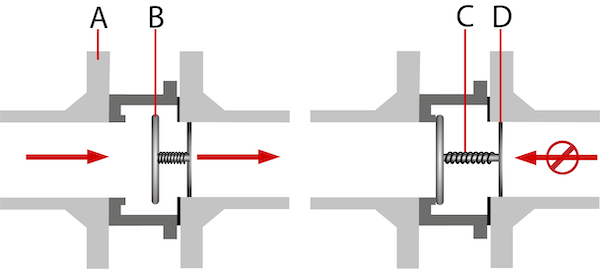
The first and most important step when installing a check valve is confirming the correct flow direction.
Most check valves are marked with a flow arrow on the body
The arrow indicates the intended direction of fluid movement
The valve must be installed so that the arrow points in the same direction as the pipeline flow
If installed incorrectly:
The valve will block flow completely, or
It may cause internal damage due to pressure buildup
In fire protection systems, incorrect installation may prevent water from reaching sprinklers during an emergency, creating serious safety risks.
2. Types of Check Valves and Installation Orientation
Different types of check valves have specific installation requirements. Understanding these differences is key to proper performance.
✔ Swing Check Valve
Best installed in horizontal pipelines
The disc swings open with flow and closes by gravity
Must be installed so the hinge is at the top
Application: Fire systems, water supply pipelines
✔ Lift Check Valve
Can be installed in horizontal or vertical pipelines
For vertical installation, flow must move upward
Works similarly to a globe valve, using pressure to lift the disc
Application: High-pressure systems
✔ Spring-Loaded (Silent) Check Valve
Can be installed in any orientation (horizontal or vertical)
Uses a spring to assist closing, reducing water hammer
Ideal for systems requiring quick shutoff
Application: Pump outlets, HVAC, fire protection
✔ Dual Plate / Wafer Check Valve
Compact design for limited space installations
Typically installed in horizontal pipelines
Plates open with flow and close rapidly
Application: Industrial and fire pipelines
3. Horizontal vs Vertical Installation Guidelines
Horizontal Installation
Preferred for most check valves
Ensures stable operation and minimal wear
Prevents uneven stress on internal components
Vertical Installation
Only suitable for certain valve types
Flow direction must usually be bottom to top
Avoid downward flow unless specified by manufacturer
Incorrect orientation can result in:
Valve chatter (vibration and noise)
Incomplete sealing
Accelerated wear and tear
4. Proper Positioning in the Pipeline
Correct placement within the piping system is just as important as direction and orientation.
Recommended Installation Practices:
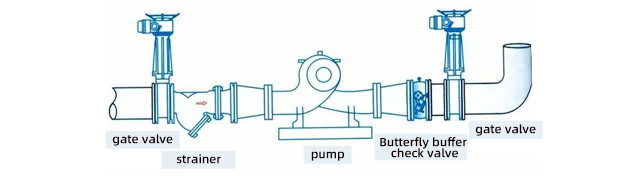
Install the valve 5–10 pipe diameters away from pumps, elbows, or tees
Avoid areas with turbulent or pulsating flow
Ensure adequate space for maintenance and inspection
Install near pump outlets to prevent backflow damage
Why Position Matters:
Poor placement can cause:
Unstable valve operation
Increased pressure loss
Reduced lifespan of both valve and system components
5. Installation Steps (Step-by-Step Guide)
Inspect the valve
Check for damage or debris
Ensure internal parts move freely
Confirm flow direction
Locate the arrow on the valve body
Prepare the pipeline
Clean pipes to remove dirt or welding residue
Align the valve correctly
Match flow direction and proper orientation
Secure the valve
Use appropriate bolts, flanges, or threaded connections
Seal properly
Apply PTFE tape or gaskets to prevent leakage
Test the system
Run fluid through the system
Check for leaks and proper valve operation
6. Common Installation Mistakes to Avoid
Avoiding these common errors can save time and prevent costly repairs:
❌ Installing the valve backwards
❌ Using the wrong valve type for the application
❌ Incorrect vertical installation direction
❌ Placing too close to pumps or bends
❌ Ignoring maintenance access space
❌ Failing to clean the pipeline before installation
7. Check Valve Installation in Fire Protection Systems
In fire protection systems, check valves play a critical role in ensuring one-way water flow.
Key Considerations:
Must comply with international standards (FM, UL, etc.)
Installed in alarm check valve assemblies or pump discharge lines
Ensures water flows toward sprinklers without reverse contamination
A properly installed check valve ensures:
Reliable sprinkler activation
Stable system pressure
Protection of fire pumps and pipelines
8. Maintenance and Inspection Tips
Even after proper installation, regular maintenance is necessary:
Periodically check for leaks or unusual noise
Inspect internal components for wear
Ensure the valve closes tightly
Replace worn seals or damaged parts
Routine inspection helps extend service life and ensures consistent performance.
Conclusion
Installing a check valve correctly is essential for maintaining safe and efficient system operation. Always ensure:
The valve follows the correct flow direction
The orientation matches the valve type
The valve is installed in a proper location within the pipeline
By following these guidelines, you can prevent backflow, protect equipment, and ensure long-term reliability in any fluid system.


