

ESFR vs CMSA Sprinklers: What’s the Difference?
Leave a message
What Is an ESFR Sprinkler?
ESFR stands for Early Suppression Fast Response. These sprinklers are specially designed to suppress fires rapidly during the early stages of development.
Unlike traditional control-mode sprinklers, ESFR sprinklers discharge a large volume of water directly into the fire plume to suppress or extinguish the fire before it spreads.
Key characteristics of ESFR sprinklers include:
Fast response thermal element
High K-factor water discharge
Large water droplets for deep penetration
Designed for high challenge storage fires
Often eliminates the need for in-rack sprinklers
ESFR systems are commonly used in:
Distribution centers
High-bay warehouses
Logistics facilities
Cold storage buildings
E-commerce fulfillment centers
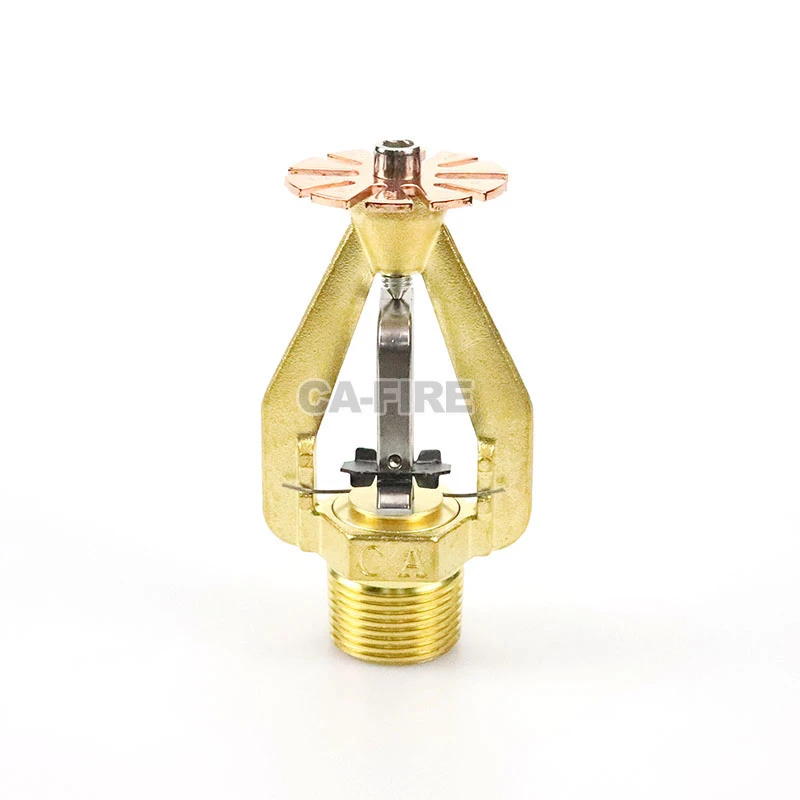
What Is a CMSA Sprinkler?
CMSA stands for Control Mode Specific Application. CMSA sprinklers are designed to control fires rather than immediately suppress them.
These sprinklers provide higher water density than conventional control-mode sprinklers but typically do not suppress fires as aggressively as ESFR systems.
CMSA sprinklers are often selected when:
Building conditions are not suitable for ESFR
Obstructions prevent ESFR installation
Storage configurations require specialized protection
Existing systems are being upgraded
CMSA systems are commonly found in:
Industrial warehouses
Manufacturing plants
Storage facilities with complex ceiling structures
Retrofit fire protection projects

ESFR vs CMSA: Main Differences
1. Fire Suppression Method
The biggest difference between ESFR and CMSA systems is how they respond to fire.
ESFR Sprinklers
ESFR sprinklers are designed to suppress fires quickly at the ceiling level before the fire grows significantly.
CMSA Sprinklers
CMSA sprinklers focus on controlling the fire and preventing its spread until firefighters arrive.
This difference directly affects system design, water demand and storage limitations.
2. Response Speed
ESFR sprinklers use fast response elements that activate more quickly under rising temperatures.
CMSA sprinklers may also use fast response technology, but their suppression capability is generally lower than ESFR systems.
Faster activation allows ESFR systems to:
Reduce fire growth earlier
Minimize smoke production
Lower heat release rates
Reduce structural damage
3. Water Discharge Requirements
ESFR sprinklers require very high water flow rates and pressure.
Typical ESFR systems use:
Larger K-factors
Higher operating pressures
Larger pipe sizes
Greater water supply capacity
CMSA systems generally require:
Lower pressure
Moderate water density
Smaller hydraulic demand
Because of this, ESFR systems may require more powerful fire pumps and larger water storage tanks.
4. In-Rack Sprinkler Requirements
One of the major advantages of ESFR systems is that they can often eliminate the need for in-rack sprinklers.
This provides several benefits:
Lower installation costs
Easier warehouse operations
Reduced risk of sprinkler damage
Better flexibility for storage changes
CMSA systems may still require in-rack sprinklers depending on:
Commodity type
Storage height
Ceiling height
Rack configuration
5. Ceiling Height Compatibility
ESFR systems are commonly designed for very high ceiling warehouses and modern logistics centers.
However, ESFR performance can be affected by:
Ceiling obstructions
Large beams
HVAC ducts
Complex roof structures
CMSA sprinklers may offer greater flexibility in buildings with difficult ceiling conditions.
6. Storage Applications
ESFR Sprinklers Are Ideal For:
Cartoned plastics
High-piled storage
Automated warehouses
Large logistics centers
E-commerce fulfillment operations
CMSA Sprinklers Are Suitable For:
Mixed commodity storage
Existing warehouse upgrades
Facilities with structural limitations
Specialized industrial storage
Advantages of ESFR Sprinklers
ESFR technology has become increasingly popular because of its strong suppression capability.
Main advantages include:
Faster Fire Suppression
ESFR systems attack fires aggressively during the early stage.
Reduced Need for In-Rack Sprinklers
This simplifies warehouse layouts and maintenance.
Better Protection for High Storage
ESFR systems are highly effective for modern high-density storage facilities.
Lower Fire Damage
Rapid suppression helps reduce inventory loss and operational downtime.
Improved Warehouse Flexibility
Without in-rack piping, warehouse layouts can be modified more easily.
Advantages of CMSA Sprinklers
CMSA systems also offer important benefits.
More Flexible Installation
CMSA systems may work better in buildings with ceiling obstructions.
Lower Water Demand
Compared with ESFR systems, CMSA systems often require less hydraulic capacity.
Easier Retrofit Applications
CMSA sprinklers are commonly used when upgrading older facilities.
Cost-Effective for Certain Projects
For some storage arrangements, CMSA systems may provide sufficient protection at lower installation cost.
Challenges of ESFR Systems
Despite their advantages, ESFR systems also have limitations.
High Water Supply Requirements
Large water flow demand can increase infrastructure costs.
Sensitivity to Obstructions
Improper installation may reduce suppression effectiveness.
Strict Design Standards
ESFR systems require precise hydraulic calculations and layout design.
Higher Initial Investment
Fire pumps, pipe sizes and water storage requirements can increase project cost.
Challenges of CMSA Systems
CMSA systems also present certain limitations.
Potential Need for In-Rack Sprinklers
Some storage configurations still require additional protection.
Less Aggressive Suppression
CMSA systems primarily control rather than extinguish fires.
Greater Fire Damage Risk
Because suppression is slower, inventory damage may be higher compared with ESFR systems.
Which System Is Better?
There is no universal answer. The best choice depends on:
Warehouse size
Storage height
Commodity classification
Ceiling structure
Water supply capability
Insurance requirements
Local fire codes
Budget considerations
In many modern logistics warehouses, ESFR systems are preferred because they provide superior fire suppression and operational flexibility.
However, CMSA systems remain highly valuable for retrofit projects and buildings where ESFR installation is impractical.
Importance of FM Approved Sprinklers
Whether selecting ESFR or CMSA sprinklers, certification is critical.
FM Approved fire sprinklers are tested for:
Performance reliability
Hydraulic characteristics
Thermal sensitivity
Corrosion resistance
Long-term durability
Using certified sprinklers helps ensure compliance with international fire protection standards and improves system reliability in real fire conditions.
Conclusion
Both ESFR and CMSA sprinkler systems play essential roles in warehouse fire protection. ESFR sprinklers focus on rapid fire suppression and are widely used in modern high-storage logistics facilities. CMSA sprinklers are designed for fire control and offer greater flexibility for certain building conditions and retrofit projects.
Choosing the correct system requires careful evaluation of storage configuration, ceiling design, water supply and fire protection objectives.
As warehouses continue evolving toward higher density and automation, selecting the right sprinkler technology becomes increasingly important for protecting property, reducing downtime and improving fire safety performance.


