
Do Fire Sprinklers React to Smoke?
Leave a message
Many people assume that fire sprinklers work the same way as smoke detectors. In movies and television shows, smoke appears and suddenly every sprinkler in the building activates. In reality, this is not how modern fire sprinkler systems operate.
Fire sprinklers do not detect smoke. They are designed to respond to heat generated by a fire. Understanding the difference between smoke detection systems and sprinkler systems is important for building safety, fire prevention, and proper fire protection planning.

How Fire Sprinklers Actually Work
Automatic fire sprinklers are heat-activated devices connected to a pressurized water piping system. Each sprinkler operates independently and is triggered only when the surrounding air temperature reaches a specific level.
Most fire sprinklers use one of two heat-sensitive mechanisms:
Glass Bulb Sprinklers
These sprinklers contain a small glass bulb filled with a special liquid. When heat increases, the liquid expands until the bulb breaks, releasing water.
The bulb color indicates the sprinkler's temperature rating:
Orange: 57°C (135°F)
Red: 68°C (155°F)
Yellow: 79°C (175°F)
Green: 93°C (200°F)
Different temperature ratings are selected depending on the building environment and fire risk.
Fusible Link Sprinklers
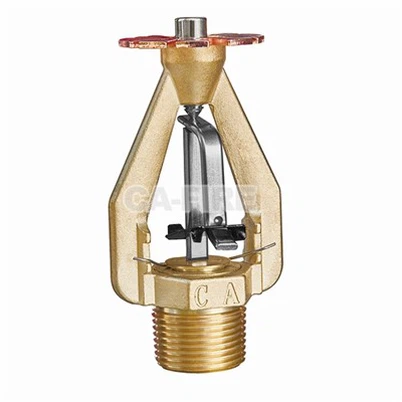
Some sprinklers use a metal fusible link instead of a glass bulb. When exposed to high temperatures, the metal melts and activates the sprinkler.
Both designs are highly reliable and widely used in commercial and industrial fire protection systems.
Why Fire Sprinklers Do Not Detect Smoke
Smoke alone is not enough to activate a sprinkler. This design prevents accidental water discharge caused by:
Cooking smoke
Steam from bathrooms or kitchens
Dust particles
Cigarette smoke
Aerosol sprays
If sprinklers reacted to smoke directly, false activations would occur frequently and could cause unnecessary water damage.
By responding only to significant heat, sprinkler systems remain dependable and effective during actual fire emergencies.
What Devices Detect Smoke?
Smoke is detected by smoke alarms or fire detection systems, not by sprinklers.
Smoke detectors are designed to identify airborne combustion particles and send an early warning signal. Their main purpose is to alert building occupants before the fire grows larger.
There are two common types of smoke detectors:
Ionization Smoke Detectors
These are more sensitive to fast-flaming fires and detect very small combustion particles quickly.
Photoelectric Smoke Detectors
These are better at detecting slow, smoldering fires that produce large amounts of smoke before visible flames appear.
Modern buildings often combine both technologies for improved safety.
How Fire Sprinklers and Smoke Detectors Work Together
Although they serve different purposes, smoke detectors and sprinkler systems work together as part of a complete fire protection solution.
Smoke Detectors
Provide early warning
Activate fire alarms
Help occupants evacuate safely
Notify emergency responders
Fire Sprinklers
Control or suppress the fire
Reduce heat and smoke spread
Protect property and building structure
Improve occupant survival rates
Together, these systems significantly reduce fire-related injuries, deaths, and property damage.
Will Every Sprinkler Activate During a Fire?
One of the most common misconceptions is that all sprinklers activate simultaneously.
In most standard wet pipe sprinkler systems, only the sprinkler nearest to the fire activates because only that sprinkler reaches the required temperature.
For example, if a small fire starts in one office room, usually only one or two sprinklers will operate. This localized response helps minimize water usage and reduces unnecessary damage to unaffected areas.
Systems Where All Nozzles Activate
There are some special fire protection systems where all nozzles discharge water at once. These are called deluge systems.
Deluge systems are commonly used in:
Aircraft hangars
Chemical plants
Oil and gas facilities
Power stations
Industrial hazard zones
In these environments, rapid fire spread is possible, so full-area water discharge is necessary.
How Long Does It Take for a Sprinkler to Activate?
The activation time depends on:
Fire size
Ceiling height
Airflow conditions
Sprinkler temperature rating
Quick response sprinklers are designed to activate faster than standard response sprinklers and are often installed in hotels, offices, schools, and residential buildings.
In many cases, a sprinkler can activate within one to four minutes after a fire begins.
Are Fire Sprinklers Effective?
Yes. Fire sprinkler systems are one of the most effective fire protection methods available.
According to fire safety studies, properly installed sprinkler systems can:
Control fires before firefighters arrive
Reduce fire deaths significantly
Lower property damage costs
Limit smoke and heat spread
In many fire incidents, a single sprinkler head is enough to control the fire.
Common Applications of Fire Sprinkler Systems
Fire sprinklers are widely installed in:
Hotels
Hospitals
Office buildings
Shopping centers
Warehouses
Residential apartments
Factories
Data centers
Different sprinkler models and system types are selected based on building design and hazard classification.
Maintenance and Inspection
Regular inspection and maintenance are essential to ensure reliable sprinkler performance.
Typical maintenance procedures include:
Inspecting sprinkler heads for damage
Checking for corrosion or leaks
Verifying water pressure
Testing alarm valves
Ensuring sprinklers are not painted or obstructed
A blocked or damaged sprinkler may not function correctly during a fire emergency.
Conclusion
Fire sprinklers do not detect smoke. They activate only when exposed to heat from a fire. Smoke detectors provide early warning, while sprinkler systems actively control or suppress the fire once temperatures rise.
Together, these systems create a highly effective fire protection strategy that improves life safety, protects property, and reduces fire damage in residential, commercial, and industrial buildings.