

Choosing the Correct Fire Hose Coupling
Leave a message
Fire hose couplings are critical components in fire protection systems, providing secure and reliable connections between fire hoses, hydrants, valves, nozzles, and other firefighting equipment. A properly selected coupling helps maintain stable water flow, minimizes leakage, and ensures fast emergency response during firefighting operations. Choosing the correct fire hose coupling is essential for both system performance and operational safety.
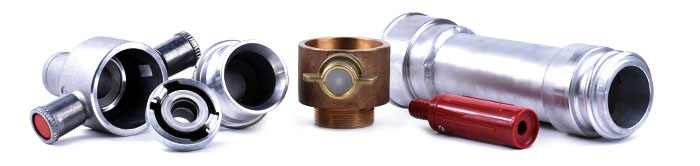
Importance of Fire Hose Couplings
During a fire emergency, firefighters rely on hose connections that can withstand high pressure and harsh operating conditions. Poor-quality or incompatible couplings may cause water leakage, pressure loss, or accidental disconnection, reducing firefighting efficiency and increasing safety risks.
High-quality fire hose couplings are designed to provide:
Reliable sealing performance
Fast and secure connection
Resistance to corrosion and wear
Long service life
Compatibility with local fire protection standards
Common Materials for Fire Hose Couplings
Brass Fire Hose Couplings
Brass couplings are widely used because of their excellent corrosion resistance, durability, and strength. They perform well in humid environments and are suitable for commercial buildings, marine systems, and industrial fire protection projects.
Aluminum Fire Hose Couplings
Aluminum couplings are lightweight and easy to handle, making them popular in portable firefighting applications. They are commonly used by fire departments and emergency rescue teams where quick deployment is important.
Stainless Steel Fire Hose Couplings
Stainless steel couplings provide superior corrosion resistance and mechanical strength. They are ideal for chemical plants, offshore platforms, and other harsh industrial environments requiring long-term reliability.
Different Types of Fire Hose Couplings
Several coupling standards are used worldwide, and selecting the correct type depends on regional regulations and system compatibility.
Storz Couplings
Storz couplings use a symmetrical quarter-turn locking design that allows quick and easy connection. They are widely used in Europe and many international firefighting systems.
NST Couplings
NST (National Standard Thread) couplings are commonly used in the United States. These threaded couplings provide secure connections for fire hoses and hydrants.
BS Instantaneous Couplings
BS couplings are mainly used in the United Kingdom and some Commonwealth countries. They allow fast hose connection and disconnection during firefighting operations.
Threaded Couplings
Threaded couplings remain common in many industrial and municipal fire protection systems. Proper thread compatibility is necessary to prevent leakage and installation problems.
Key Factors When Selecting Fire Hose Couplings
Hose Size Compatibility
The coupling size must match the fire hose diameter to ensure proper water flow and connection stability. Common hose sizes include 1.5 inch, 2.5 inch, and 4 inch applications.
Working Pressure
Fire protection systems may operate under different pressure levels. Couplings should be selected according to the system's maximum working pressure and pressure surge requirements.
Application Environment
Environmental conditions greatly influence material selection. Coastal areas, chemical plants, and outdoor installations often require corrosion-resistant materials for longer service life.
Certification and Standards
Certified fire protection products help ensure product quality and compliance with international safety requirements. Many projects require components that meet FM, UL, CE, or local fire protection standards.
Maintenance and Inspection
Regular inspection of fire hose couplings is important for maintaining system reliability. Common maintenance checks include:
Inspecting for corrosion or rust
Checking gasket condition
Verifying thread integrity
Ensuring secure locking performance
Testing for water leakage
Damaged or worn couplings should be replaced immediately to avoid failure during emergency situations.
Future Trends in Fire Hose Coupling Design
Modern fire protection systems increasingly demand lightweight, corrosion-resistant, and quick-connect coupling solutions. Manufacturers continue to improve coupling designs to enhance installation efficiency, durability, and compatibility with smart firefighting systems.
As fire safety standards continue to evolve in 2026, reliable fire hose couplings remain an essential part of efficient and dependable fire protection systems for commercial buildings, warehouses, industrial plants, marine projects, and municipal infrastructure.


