
Can One Fire Sprinkler Activate All Sprinklers?
Leave a message
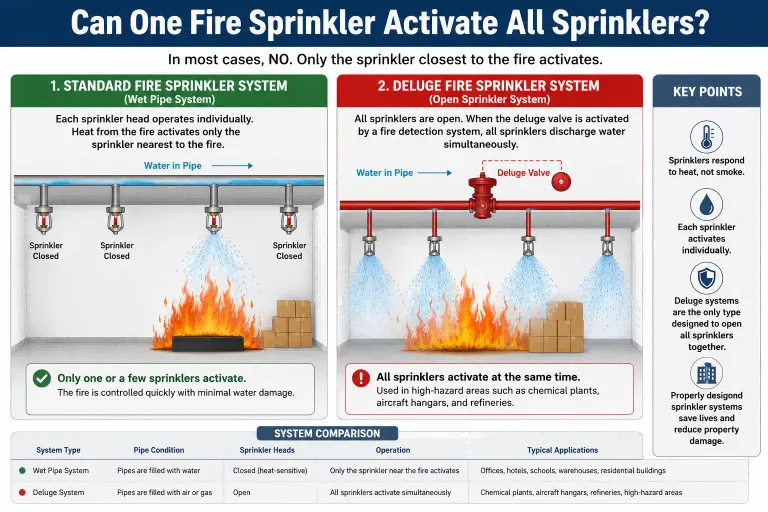
Many people believe that when one fire sprinkler activates, all sprinklers in the building will discharge water at the same time. This is one of the most common myths about fire sprinkler systems. In reality, most fire sprinkler systems are designed so that only the sprinkler closest to the fire activates.
How Fire Sprinklers Actually Work
Automatic fire sprinklers operate individually. Each sprinkler head contains a heat-sensitive element, such as a glass bulb or fusible link, that reacts to high temperatures. When the surrounding temperature reaches the sprinkler's rated activation point, the element breaks or releases, allowing water to flow.
This means only the sprinkler exposed to enough heat will activate first. Nearby sprinklers will remain closed unless the fire spreads and temperatures continue to rise.
Why Not All Sprinklers Activate Together
Fire sprinkler systems are designed to control fires quickly while minimizing unnecessary water damage. Activating every sprinkler at once would waste large amounts of water and could damage property more than necessary.
In most building fires, one or two sprinklers are often enough to control or extinguish the fire before firefighters arrive.
This targeted response is one reason sprinkler systems are highly effective in hotels, offices, warehouses, shopping centers, and residential buildings.
Types of Fire Sprinkler Systems
Different sprinkler systems operate in different ways depending on the application.
Wet Pipe Sprinkler System
The wet pipe system is the most common type. Water is constantly stored inside the pipes, allowing immediate discharge once a sprinkler activates.
Dry Pipe Sprinkler System
Dry pipe systems contain pressurized air or nitrogen instead of water. When a sprinkler opens, the air pressure drops and water enters the piping system.
Deluge Fire Sprinkler System
Unlike standard systems, deluge systems use open sprinklers and are designed to release water through all sprinklers simultaneously. These systems are typically used in high-hazard areas such as chemical plants, aircraft hangars, and industrial facilities.
This is one reason people mistakenly believe all sprinklers always activate together.
Common Causes of Fire Sprinkler Activation
Sprinklers are triggered by heat, not smoke. Common activation causes include:
Electrical fires
Kitchen fires
Flammable liquid fires
Industrial equipment overheating
Rapid temperature increase during a fire
Accidental activation is rare when systems are properly installed and maintained.
Benefits of Automatic Fire Sprinkler Systems
Modern fire sprinkler systems provide several important advantages:
Fast fire control
Reduced fire spread
Lower property damage
Improved occupant safety
Reduced insurance losses
Increased building code compliance
Fire sprinklers are considered one of the most reliable fire protection solutions worldwide.
Conclusion
In most cases, one fire sprinkler does not activate all sprinklers in a building. Standard fire sprinkler systems are designed so that individual sprinkler heads respond only to heat near the fire source. Only special systems such as deluge systems discharge water from all sprinklers simultaneously.
Understanding how fire sprinklers work helps building owners, contractors, and occupants better appreciate the importance of modern fire protection systems.