


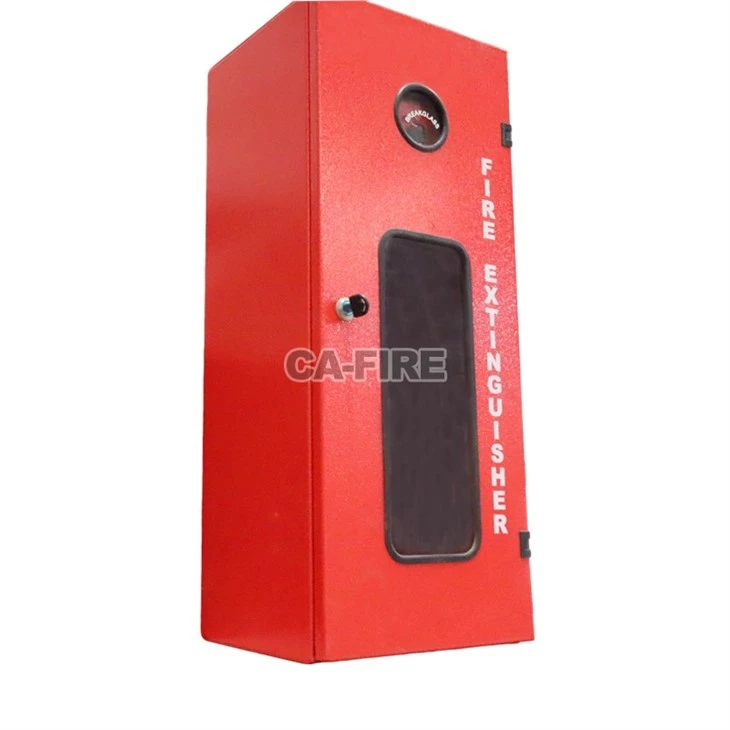

Fire Extinguisher Cabinets
This fire extinguisher cabinet safeguards extinguishers from dust, damage and unauthorized tampering. Its visible window allows quick identification, while the secure enclosure ensures the device stays accessible and functional for immediate use during fire emergencies.
Description
fire extinguisher cabinets---What size of fire extinguisher fits a standard cabinet?

fire extinguisher cabinets
A standard fire extinguisher cabinet typically accommodates 2.5–10-pound (1.1–4.5 kg) portable fire extinguishers-the most common sizes for commercial and residential use. These cabinets are designed with internal dimensions matching standard extinguisher dimensions: for example, a 5-pound extinguisher (roughly 13–16 inches tall, 4–6 inches in diameter) fits most basic wall-mounted cabinets. Larger 10-pound models may require slightly wider or deeper standard cabinets, while compact 2.5-pound extinguishers work in smaller, space-saving cabinet variants. It's critical to check the cabinet's product specifications, as some are tailored to specific extinguisher types (e.g., dry chemical vs. CO₂) that vary in shape and size.
Technical datasheet for fire extinguisher cabinets

t
fire extinguisher cabinets---How often should the cabinet's latch or seal be inspected?
General Inspection Frequency (Routine)
For most commercial and residential settings, the cabinet's latch or seal should undergo monthly visual inspections. This quick check ensures the latch operates smoothly (no jamming) and the seal remains intact (no cracks or gaps that let in dust/moisture). Monthly checks are low-effort but critical to catch minor issues early-simply test the latch's open/close function and examine the seal for wear during regular fire safety walkthroughs.
High-Traffic/Harsh Environment Frequency
In high-traffic areas (e.g., warehouses, schools) or harsh environments (outdoor, coastal locations), biweekly inspections are recommended. Constant foot traffic may loosen latch components, while outdoor moisture or salt air can degrade seals faster. Biweekly checks let you address loose latches (via tightening) or damaged seals (via replacement) before they compromise the cabinet's ability to protect the extinguisher.
Formal Maintenance Inspection Frequency
Beyond visual checks, a quarterly detailed inspection is advised. This involves testing the latch's locking mechanism (ensuring it secures tightly), cleaning debris from latch hinges, and verifying the seal's airtightness (to prevent extinguisher corrosion). Quarterly inspections are more thorough-they can identify hidden wear (e.g., rusted latch springs) that monthly checks might miss, keeping the cabinet functional long-term.
Compliance-Driven Inspection Frequency
To meet fire safety codes (e.g., NFPA standards), annual professional inspections are required. A certified technician will assess the latch's structural integrity (e.g., no bent parts) and the seal's compliance with safety ratings. Annual inspections document that the cabinet meets regulatory requirements, which is essential for passing fire safety audits and maintaining liability protection.
OUR CERTIFICATE:


Our address
NO.8, YUANFENG ROAD, MEIYUAN VILLAGE, KANGMEI TOWN, NANAN CITY, QUANZHOU CITY, FUJIAN CHINA
Phone Number
+86 15960762930
alison@ca-fire.com

Hot Tags: fire extinguisher cabinets, China fire extinguisher cabinets manufacturers, suppliers, factory
Send Inquiry
You Might Also Like


