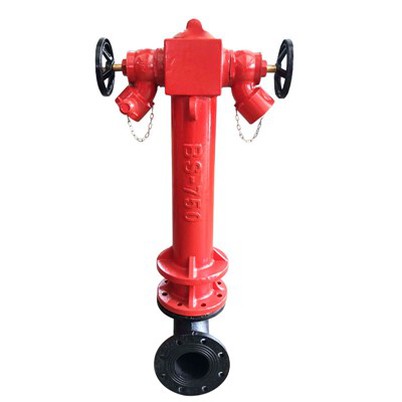


British Standard BS750 Wet Fire Hydrant DN65 For Industrial & Municipal Fire Safety

British Standard BS750 Wet Fire Hydrant DN65 For Industrial & Municipal Fire Safety suppliers

British Standard BS750 Wet Fire Hydrant DN65 For Industrial & Municipal Fire Safety factory

British Standard BS750 Wet Fire Hydrant DN65 For Industrial & Municipal Fire Safety best

British Standard BS750 Wet Fire Hydrant DN65 For Industrial & Municipal Fire Safety high quality

British Standard BS750 Wet Fire Hydrant DN65 For Industrial & Municipal Fire Safety price
British Standard BS750 Wet Fire Hydrant DN65 For Industrial & Municipal Fire Safety
The BS750 Wet Barrel Hydrant is a British standard above-ground fire hydrant designed for rapid and reliable water supply in fire protection systems. It remains permanently filled with pressurized water, enabling instant activation during emergencies. Equipped with standardized outlets such as DN65, it ensures fast connection with firefighting hoses and equipment. Widely used in municipal and industrial fire networks, it provides stable performance, durable construction, and efficient water delivery for critical firefighting operations.
Description
Ca-Fire Protection Co.,Ltd is one of the most credible manufacturers and suppliers of british standard bs750 wet fire hydrant dn65 for industrial & municipal fire safety in China. Welcome to wholesale custom made fire equipment products at competitive price from our factory. Contact us for more cheap products.
British Standard BS750 Wet Fire Hydrant

CA-FIRE British Standard BS750 Wet Fire Hydrant
The BS750 British above-ground hydrant is engineered to deliver dependable water supply for fire suppression in municipal and industrial settings. Constructed to meet BS750 specifications, it utilizes a robust ductile iron housing with anti-corrosion surface treatment, complemented by premium brass internals engineered for extended operational lifespan.
This unit incorporates dual DN65 brass discharge connections, facilitating rapid deployment and optimal water output during emergency response. Its meticulously crafted valve assembly guarantees effortless actuation, consistent pressure regulation, and leak-proof integrity even under elevated operating pressures.
Ideal for deployment across metropolitan fire networks, manufacturing complexes, storage facilities, and retail environments, the hydrant offers straightforward setup, minimal upkeep demands, and exceptional resilience against severe weather and environmental exposure.
It stands as a critical element within contemporary fire defense frameworks, enabling swift intervention and reliable water distribution when emergencies arise.
Role in Municipal Fire Protection Networks
Within contemporary urban fire defense networks, BS750 wet barrel hydrants serve as vital infrastructure elements distributed throughout densely populated areas. These units are systematically positioned along thoroughfares, within residential developments, commercial zones, civic structures, and other high-concentration metropolitan regions to guarantee instantaneous water source availability during crisis events.
The core purpose of these installations centers on delivering an accessible, high-capacity water extraction point for emergency vehicles and suppression personnel. Given the accelerated fire propagation risks inherent in compact urban landscapes-where structural proximity and human density amplify hazards-a dependable hydrant grid proves indispensable for effective incident management and hazard mitigation.
BS750 wet barrel configurations typically interface directly with municipal distribution conduits or dedicated fire suppression mains. Such integration preserves consistent hydraulic pressure and uninterrupted availability throughout standard operations. The architecture accommodates concurrent deployment across numerous hydrant locations, a crucial capability during extensive conflagrations affecting urban centers.
When incidents arise, emergency responders can rapidly identify hydrant positions, attach conventional hose assemblies to the DN connections, and initiate water projection within moments. This swift mobilization capability substantially compresses reaction intervals, enabling crews to contain and extinguish combustion at nascent stages prior to lateral spread toward neighboring properties or utilities.
Hydrant Network Design and Water Supply Efficiency
A well-planned fire hydrant network is a fundamental part of any modern fire protection system. In municipal and industrial fire safety engineering, BS750 wet barrel hydrants are integrated into water distribution systems based on hydraulic design principles, fire risk assessment, and coverage optimization. The main goal of hydrant network design is to ensure that sufficient water is available at the right location, with stable pressure and adequate flow rate, during emergency fire conditions.
In a typical fire protection layout, hydrants are installed at calculated intervals along streets, facility boundaries, and high-risk zones. The spacing and positioning are determined by factors such as building density, road accessibility, fire hazard level, and local fire safety regulations. This strategic distribution ensures that firefighters can quickly access a hydrant from any critical point within the protected area.
Water supply efficiency is a key consideration in hydrant network engineering. BS750 wet barrel hydrants are usually connected to a pressurized municipal water main or dedicated fire water ring main system, which helps maintain consistent pressure throughout the network. In more advanced systems, booster pumps and pressure zoning may also be used to ensure adequate flow in high-rise or large industrial facilities.
A properly designed hydrant network must also account for simultaneous demand scenarios, where multiple hydrants may operate at the same time during a large-scale fire. Hydraulic calculations are therefore carried out to ensure that the system can maintain sufficient flow capacity without significant pressure loss. This is essential for effective fire suppression over large areas or complex facilities.


Integration with Modern Firefighting Equipment
The BS750 wet barrel hydrant serves as a critical junction linking municipal water infrastructure with contemporary fire suppression apparatus. In current fire protection engineering practice, these units have evolved beyond simple discharge points to become integral nodes within unified emergency response architectures.
A paramount feature of BS750 specifications lies in their seamless interoperability with standardized suppression couplings and conduit systems. The outlet configuration enables emergency personnel to rapidly attach hoses, riser assemblies, and transition fittings without specialized tooling or field alterations. This streamlined connectivity proves vital during crisis scenarios where temporal efficiency directly impacts containment success.
Within modern suppression operations, BS750 wet barrel units routinely interface with pumper vehicles and portable hydraulic systems. Response teams can extract water directly from these installations to feed high-volume pumping equipment, facilitating sustained high-pressure projection capabilities. This operational capacity becomes particularly crucial during extensive industrial incidents requiring prolonged water delivery for comprehensive extinguishment efforts.
Moreover, these hydrants accommodate integration with hose reel networks, fixed monitor installations, and provisional distribution grids. In multifaceted environments-such as storage complexes, hydrocarbon processing sites, or distribution hubs-multiple units may operate in parallel to enable synchronized suppression tactics across geographically dispersed ignition zones.

FAQ – BS750 Wet Barrel Hydrant
1. What is a BS750 wet barrel hydrant?
A BS750 wet barrel hydrant is an above-ground fire hydrant designed according to the British Standard BS750. It remains permanently filled with pressurized water, allowing immediate water discharge when the valve is opened. It is widely used in municipal and industrial fire protection systems.
2. Where are BS750 wet barrel hydrants typically installed?
They are commonly installed in urban fire protection networks, including roadsides, residential areas, commercial zones, warehouses, and industrial facilities. They are strategically placed to ensure quick access to water supply during fire emergencies.
3. What is the difference between wet barrel and dry barrel hydrants?
A wet barrel hydrant is always filled with water under pressure, allowing instant discharge. A dry barrel hydrant keeps water in the underground pipe and only fills when activated, making it suitable for freezing climates. Wet barrel hydrants are generally used in mild temperature regions.
4. What outlets are available for BS750 hydrants?
BS750 wet barrel hydrants are typically equipped with standardized outlets such as DN65 or other common firefighting connection sizes. These outlets are compatible with fire hoses, adapters, and standard firefighting equipment for quick connection.
5. How often should a BS750 hydrant be inspected?
Regular inspection is recommended to ensure reliable performance. Typical maintenance includes checking valve operation, flow testing, leakage inspection, and ensuring outlets are clean and accessible. Most fire safety standards recommend periodic testing based on local regulations and system requirements.
Our address
NO.8, YUANFENG ROAD, MEIYUAN VILLAGE, KANGMEI TOWN, NANAN CITY, QUANZHOU CITY, FUJIAN CHINA
+86 18160950625
miki@ca-fire.com

Hot Tags: british standard bs750 wet fire hydrant dn65 for industrial & municipal fire safety, China british standard bs750 wet fire hydrant dn65 for industrial & municipal fire safety manufacturers, suppliers, factory, Fire Hydrant For Fire Suppression System, Underground Water Fire Hydrant For Sale, Outdoor 16Bar 5Ways Cast Iron Fire Hydrant, Pillar Type Fire Hydrant, 5 Ways Outdoor Pillar Fire Hydrant, Fire Protection Pillar Ductile Cast Iron Fire Hydrant
Send Inquiry
You Might Also Like