
Which Fire Water Nozzle Has The Highest Flow Rate?
Leave a message
Industry Insight with Real Firefighting Scenarios
In firefighting operations, selecting the correct fire water nozzle is critical for achieving efficient fire suppression, maintaining water control, and ensuring firefighter safety. A common question in the industry is which nozzle type provides the highest flow rate.
The answer is the smooth bore (solid stream) nozzle, which delivers the highest flow due to its simple design and minimal internal resistance. However, effective firefighting depends not only on flow rate but also on choosing the right nozzle for specific fire conditions.
Understanding Flow Rate in Fire Nozzles
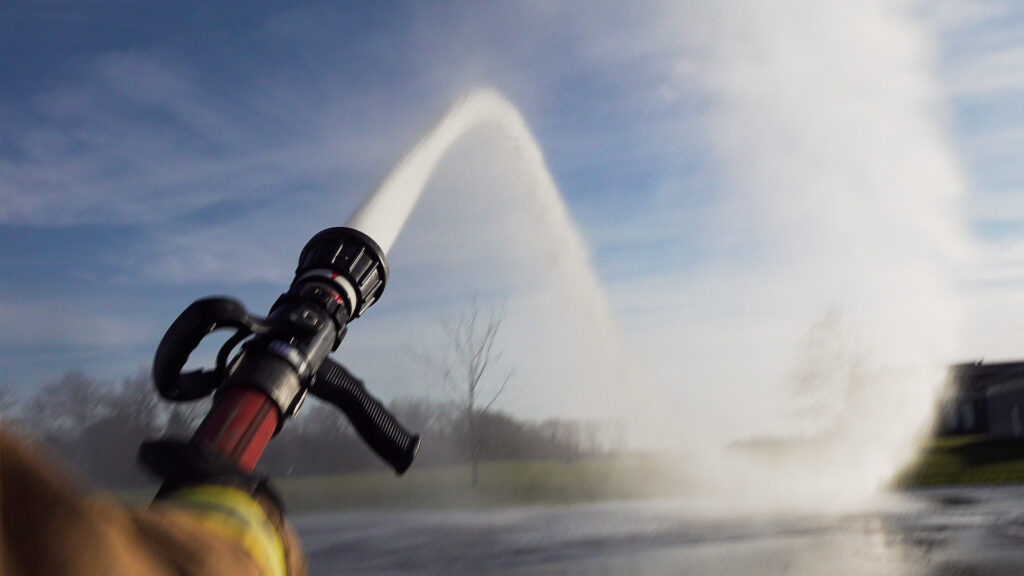
Flow rate, typically measured in gallons per minute (GPM), determines how much water is delivered onto a fire. Higher flow rates are essential for:
Rapid fire knockdown
Cooling high-temperature environments
Preventing fire spread
Flow performance depends on several factors, including nozzle design, water pressure, hose size, and pump capacity. Even a high-flow nozzle will not perform effectively if the system is not properly matched.
Smooth Bore Nozzle – Highest Flow Performance
The smooth bore nozzle features a straight-through design that minimizes turbulence and friction loss, allowing water to flow more efficiently.
Key characteristics include:
High discharge capacity, typically 250–300+ GPM depending on tip size
Strong and concentrated water stream
Long reach and deep penetration
Stable performance under low or fluctuating pressure
Because of these advantages, smooth bore nozzles are widely used in large fires where maximum water volume is required.
Application-Based Nozzle Selection
Warehouse and Industrial Fires
In large warehouses or industrial facilities, fires often involve high fuel loads such as plastics, paper, or stored goods. These fires generate intense heat and spread rapidly.
Recommended nozzle: Smooth bore nozzle
The high flow rate allows firefighters to quickly control the fire, while the solid stream penetrates deep into materials to extinguish hidden flames.
Building Interior Fires
Fires inside offices, hotels, or residential buildings require careful control to protect occupants and firefighters.
Recommended nozzle: Fog nozzle
Fog nozzles produce fine water droplets that absorb heat efficiently and help reduce smoke and temperature. They also create a protective barrier for firefighters during interior operations.
Oil and Chemical Fires
Fires involving flammable liquids cannot be effectively controlled with water alone.
Recommended nozzle: Foam nozzle
Foam nozzles mix water with foam concentrate to form a blanket over the fuel surface. This prevents oxygen from feeding the fire and reduces the risk of re-ignition.
Vehicle Fires
Vehicle fires often occur in confined or roadside environments where water supply may be limited.
Recommended nozzle: Combination nozzle
Combination nozzles allow switching between straight stream and fog patterns, offering flexibility for different stages of fire suppression while optimizing water usage.
Outdoor and Wildland Fires
Wildland fires spread quickly across large open areas and require control over wide zones.
Recommended nozzle: Fog or adjustable nozzle
These nozzles can create wide spray patterns that help contain the fire and cool surrounding vegetation, reducing the likelihood of further spread.
Flow Rate Versus Control
Although smooth bore nozzles provide the highest flow rate, modern firefighting emphasizes balancing flow with control. High flow is essential for large fires, but controlled spray patterns are equally important in confined spaces or complex environments.
Fire departments often use multiple nozzle types to adapt to changing fire conditions. This approach ensures both effective suppression and operational safety.
Engineering Considerations
When selecting a fire water nozzle, several technical factors should be evaluated:
Required flow rate and operating pressure
Type of fire hazard
Water supply capacity
Hose compatibility
Operational environment
Proper nozzle selection improves efficiency, reduces water waste, and enhances firefighting effectiveness.
Industry Trends
Firefighting equipment continues to evolve with a focus on performance and adaptability. Current trends include:
Improved hydraulic efficiency in nozzle design
Lightweight and ergonomic construction
Multi-function nozzles for versatile applications
Integration with foam and monitor systems
These developments aim to provide better control, higher efficiency, and improved safety in firefighting operations.
Conclusion
The smooth bore nozzle offers the highest flow rate among fire water nozzles and is the preferred choice for large-scale and high-intensity fires. However, selecting the right nozzle depends on the specific fire scenario.
A combination of nozzle types ensures optimal performance, allowing firefighters to respond effectively to different fire conditions.
Contact CA-FIRE for Firefighting Solutions
Website: https://www.cafire-119.com
Email: miki@ca-fire.com
WhatsApp: +86 18160950625
Explore more fire hose and nozzle solutions:
https://www.cafire-119.com/fire-nozzle/
CA-FIRE provides reliable, high-quality firefighting equipment with OEM and ODM support for global projects.