

2026 California Warehouse Fire: Lessons For Industrial Fire Safety
Leave a message
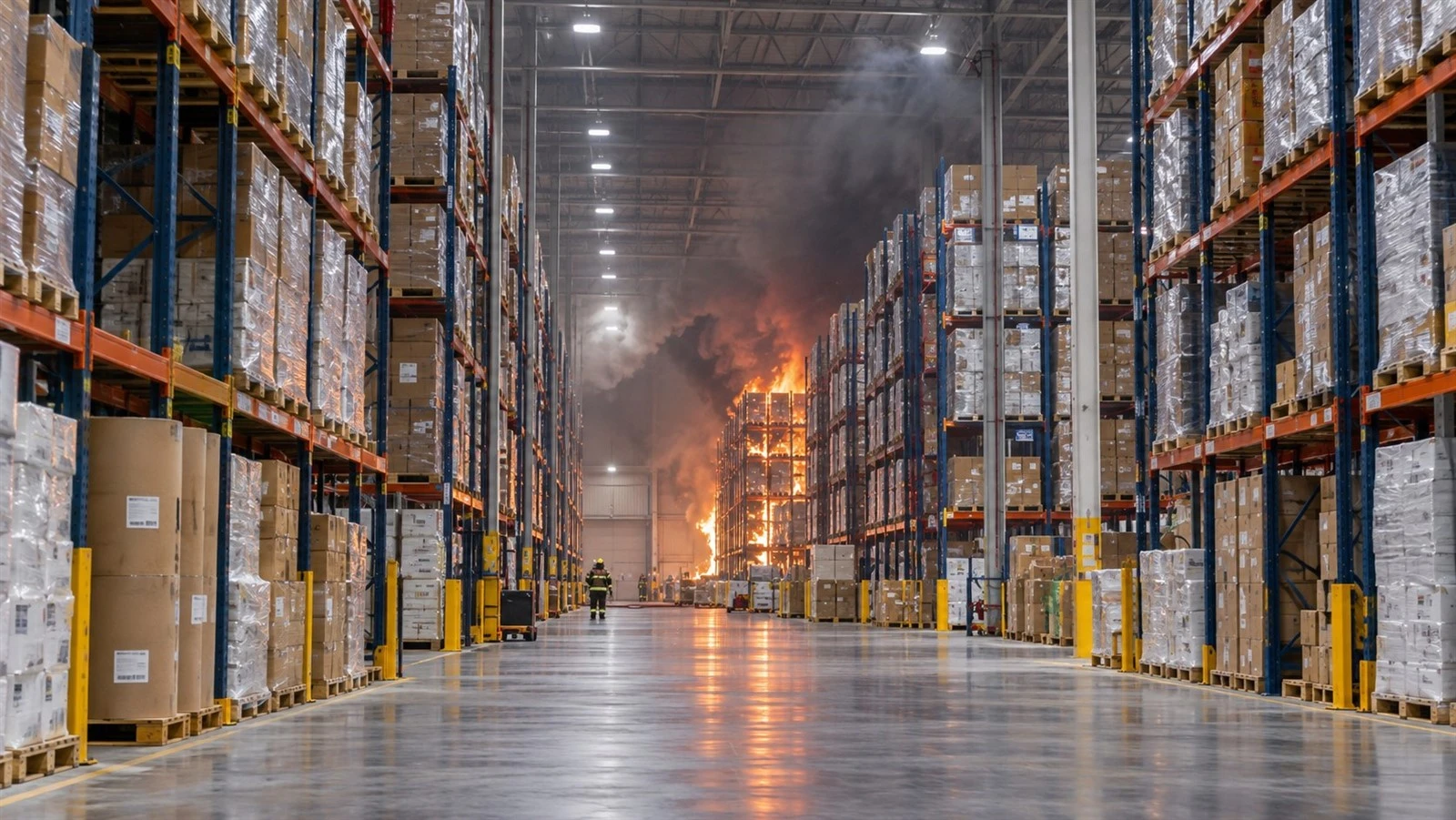
A major warehouse fire in Ontario, California, in April 2026 highlighted the challenges of managing fires in large distribution facilities. The incident involved a 1.2-million-square-foot warehouse operated by Kimberly-Clark and required a six-alarm emergency response. The case provides important considerations for warehouse fire risk management, emergency access and fire protection planning.
Case Overview: Kimberly-Clark Warehouse Fire
According to the City of Ontario, the fire was reported shortly after midnight on April 7, 2026. Firefighters arrived to find a well-established fire at a large concrete tilt-up warehouse used to distribute paper products.
An initial interior firefighting effort was discontinued because of extremely rapid fire growth. Crews then shifted to an exterior attack using high-volume master streams. The response eventually reached six alarms, involving approximately 175 firefighters and numerous engine and truck companies.
The fire was contained to the building where it originated. The city reported no injuries among responding firefighters. Authorities subsequently announced an arson-related investigation and charges. The official release did not establish that a fire protection system had failed, so the incident should not be treated as evidence of sprinkler or other system malfunction. Source: City of Ontario
Why Large Warehouse Fires Are Challenging
Rapid Fire Growth
Paper products and their packaging can contribute substantial combustible fuel loads. Once a fire becomes established, flames and heat can spread rapidly through stored materials, depending on storage arrangements, ventilation and other site conditions.
Large Building Areas
A large distribution warehouse presents challenges for locating the fire, reaching affected areas and applying firefighting water effectively. Internal obstructions, storage racks and building configuration may complicate firefighting operations.
Operational and Emergency Access
Warehouse layouts must support both routine logistics and emergency response. Loading areas, vehicle routes, storage arrangements and access points should be reviewed to ensure that firefighting operations are not unnecessarily obstructed.
Key Lessons for Warehouse Fire Protection

Review fire protection against actual storage conditions. Changes in commodity types, packaging, storage height and rack configuration should trigger a review of whether the existing fire protection design remains appropriate.
Maintain access and water supply readiness. Fire department access, fire water availability and the condition of relevant firefighting equipment should be considered as part of an established inspection and maintenance program.
Prepare for incidents that exceed initial response capabilities. Emergency plans should address evacuation, incident communication, access control and coordination with responding agencies. Staff should understand their roles during an emergency.
Coordinate building operations and fire safety. Warehouse expansion, changes in occupancy and new storage practices can alter fire risks. Facility managers should coordinate operational changes with qualified fire protection professionals.
Conclusion
The April 2026 Ontario warehouse fire demonstrates how a well-established fire can demand extensive firefighting resources at a large distribution facility. Although the official report does not establish a failure of fire protection equipment, the incident reinforces the importance of assessing combustible storage, maintaining emergency access and reviewing fire protection arrangements as warehouse operations evolve.


