
Manual vs. Remote Control Fire Monitors: How to Choose?
Leave a message

Fire monitors play a critical role in protecting large and high-risk areas where traditional firefighting equipment is insufficient. When selecting a fire monitor, one of the key decisions is choosing between manual and remote control types. Each has distinct advantages depending on the application.
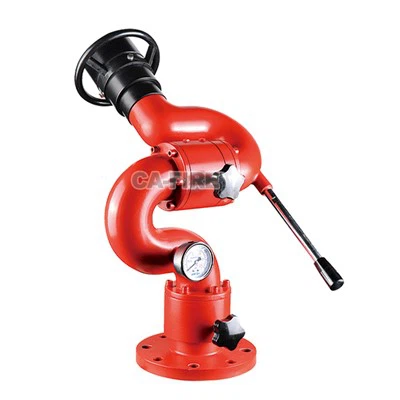
Manual fire monitors are operated directly by firefighters using handwheels or levers. They feature a simple mechanical structure, high durability, and low maintenance requirements. Due to their reliability and cost-effectiveness, manual monitors are widely used in fixed installations, municipal firefighting, warehouses, and general industrial facilities where fire risk is moderate and personnel access is safe.
Remote control fire monitors, on the other hand, are operated electrically or hydraulically from a safe distance. They allow precise control of horizontal rotation, vertical elevation, and spray patterns without exposing operators to heat, smoke, or explosion hazards. This makes them ideal for high-risk environments such as petrochemical plants, oil tank farms, LNG terminals, ports, and power stations.
When choosing between the two, consider factors such as fire risk level, operator safety requirements, automation needs, budget, and system integration. In hazardous zones, remote control fire monitors significantly improve response efficiency and firefighter safety. For standard applications, manual monitors remain a reliable and economical solution.
Selecting the right fire monitor ensures effective fire suppression and long-term operational safety.