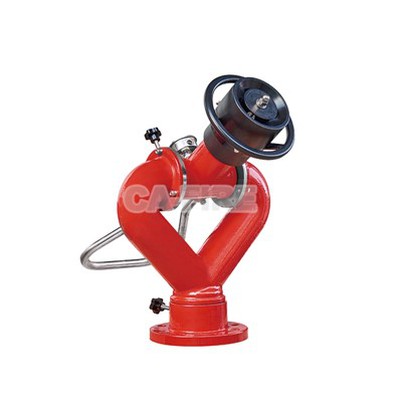

Fire Pump and Water Monitor Maintenance Tips
Leave a message
Fire pumps and water monitors play a critical role in industrial fire protection systems. Regular maintenance not only helps ensure reliable operation during emergencies, but also extends equipment lifespan and reduces unexpected failures. Proper inspection and testing are especially important for warehouses, petrochemical plants, ports, power stations, and other high-risk facilities.
Routine Inspection for Fire Pumps
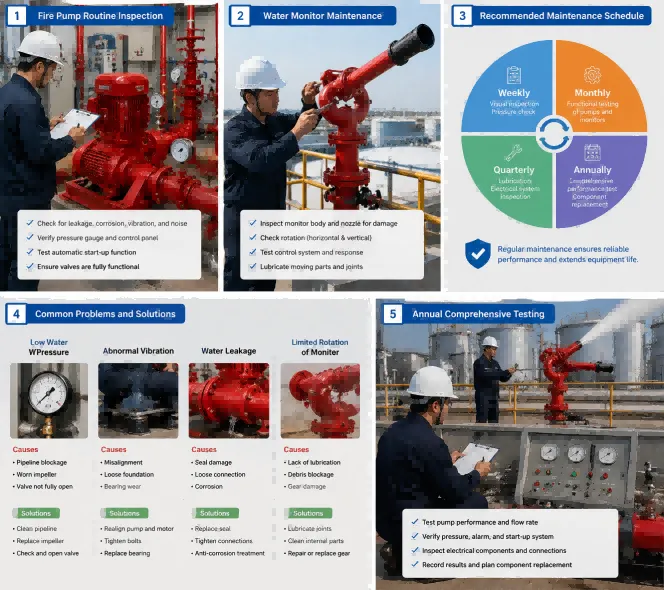
Industrial fire pumps should be inspected regularly to ensure stable pressure and water supply performance. Operators should check the pump body, motor, valves, seals, and pipelines for leakage, corrosion, vibration, or unusual noise. Pressure gauges and control panels should also be tested to confirm accurate readings and automatic start-up functions.
For diesel engine fire pumps, fuel level, battery condition, coolant, and lubricating oil must be checked frequently. Electric fire pumps should undergo electrical connection and insulation inspections to avoid startup failures.
Water Monitor Maintenance Guidelines
Water monitors are commonly installed in large industrial areas where long-range firefighting is required. Routine maintenance includes checking the monitor body, nozzle, rotation mechanism, and control system. Operators should ensure smooth horizontal and vertical movement without blockage or abnormal resistance.
For electric remote-control monitors, it is important to inspect motors, cables, controllers, and explosion-proof components regularly. Any exposed metal surfaces should be protected against rust, especially in coastal or corrosive environments.
Recommended Maintenance Schedule
Weekly: Visual inspection and pressure checks
Monthly: Functional testing of pumps and monitors
Quarterly: Lubrication and electrical system inspection
Annually: Comprehensive performance testing and component replacement if necessary
Regular testing helps identify minor issues before they develop into major failures.
Common Problems and Solutions
Low water pressure may result from pipeline blockage, worn impellers, or valve issues. Abnormal vibration can indicate misalignment or bearing wear. Water monitors with limited rotation may require lubrication or internal cleaning. Prompt maintenance can significantly improve system reliability and emergency response capability.
Conclusion
A well-maintained fire protection system is essential for industrial safety. Through scheduled inspections, proper testing, and preventive maintenance, fire pumps and water monitors can remain in optimal working condition and provide dependable protection when emergencies occur.