

Fire Protection in Waste Recycling Facilities
Leave a message
Waste recycling facilities handle various combustible materials, including paper, plastics, textiles, wood, and packaging waste. Large material piles, conveyor systems, processing equipment, and temporary storage areas can increase fire risks. A suitable fire protection strategy should consider the characteristics of each operational area.
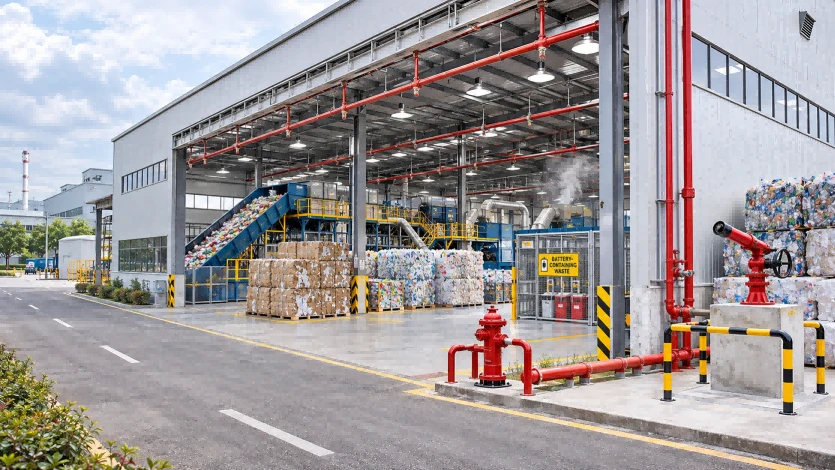
Common Fire Risks in Recycling Facilities
Combustible materials may accumulate in storage areas, sorting lines, and processing equipment. Dust, friction, overheating machinery, and electrical faults can also contribute to fire incidents.
Battery-containing waste presents additional challenges because damaged lithium-ion batteries may experience thermal runaway and ignite surrounding materials. Fire protection planning should therefore consider both ordinary combustible materials and potential battery-related hazards.
Key Fire Protection Measures
Automatic Fire Sprinkler Systems
Sprinkler protection can help control fires in buildings and storage areas. Sprinkler type, spacing, water supply, and design criteria should be selected according to storage materials, pile height, ceiling conditions, and applicable fire codes.
Fire Hydrant and Hose Systems
Fire hydrants and hose equipment provide water for firefighting operations. Their locations should allow emergency personnel to access different parts of the facility without obstruction.
Fire Monitors
Industrial fire monitors can provide high-flow water streams for large outdoor storage areas and other suitable applications. Their flow rate, operating pressure, coverage, and installation location should be evaluated during project planning.
Foam Fire Protection
Where flammable liquids or other suitable liquid-fuel hazards are present, foam systems may be considered as part of the fire protection strategy. Foam concentrate and discharge equipment must be compatible with the specific hazard and applicable requirements.
Equipment Selection and Maintenance
Fire protection equipment should be selected based on a site-specific risk assessment rather than a standard equipment list. Regular inspections should cover water supply, valves, sprinkler heads, hydrants, monitors, and other system components.
A coordinated approach to fire protection can help recycling facilities reduce operational risks and improve emergency response readiness.


