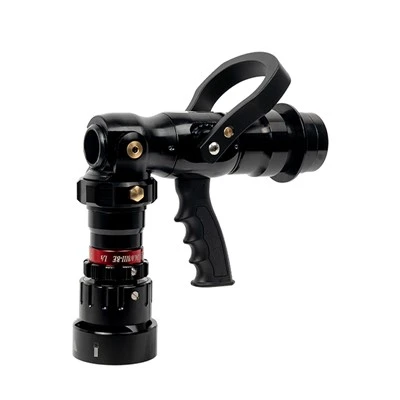

Do Foam Monitor Systems Need a Fire Pump? Basic Engineering Explanation
Leave a message
Foam monitor systems are widely used in high-risk fire protection areas such as tank farms, chemical plants, warehouses, and fuel storage facilities. A common question in system design is whether a fire pump is required for foam monitor operation.

1. Working Principle of Foam Monitor System
A foam monitor system generally works as follows:
Water supply → fire pump (if required) → foam proportioning system → foam solution → foam monitor nozzle → discharge
The foam proportioning system mixes water with foam concentrate at a fixed ratio (commonly 3% or 6%), and the foam monitor discharges the solution over a long distance to cover the fire area.
2. Is a Fire Pump Necessary?
In most engineering applications, a fire pump set is required.
This is because foam monitors typically demand:
High flow rate (commonly 500–4000 LPM or more)
Stable working pressure (usually 7–12 bar depending on system design)
In many real project conditions, municipal water supply or gravity feed cannot provide sufficient and stable pressure. Therefore, a fire pump set is used to ensure reliable system performance.
However, the final requirement depends on site conditions, especially:
Available water pressure
Required discharge distance
Monitor flow capacity
3. Role of Water Tank and Foam Tank
It is important to distinguish system components:
Water tank: provides fire water supply (large capacity required)
Foam concentrate tank (e.g., 500L horizontal tank): stores foam liquid only
Fire pump: ensures required pressure and flow (if needed)
The 500L tank is not a water source, but only a foam concentrate storage tank.
4. Conclusion
Foam monitor systems require reliable hydraulic performance. In most cases, a fire pump system is essential to ensure proper pressure and flow. However, final configuration should always be based on actual site conditions and engineering requirements.