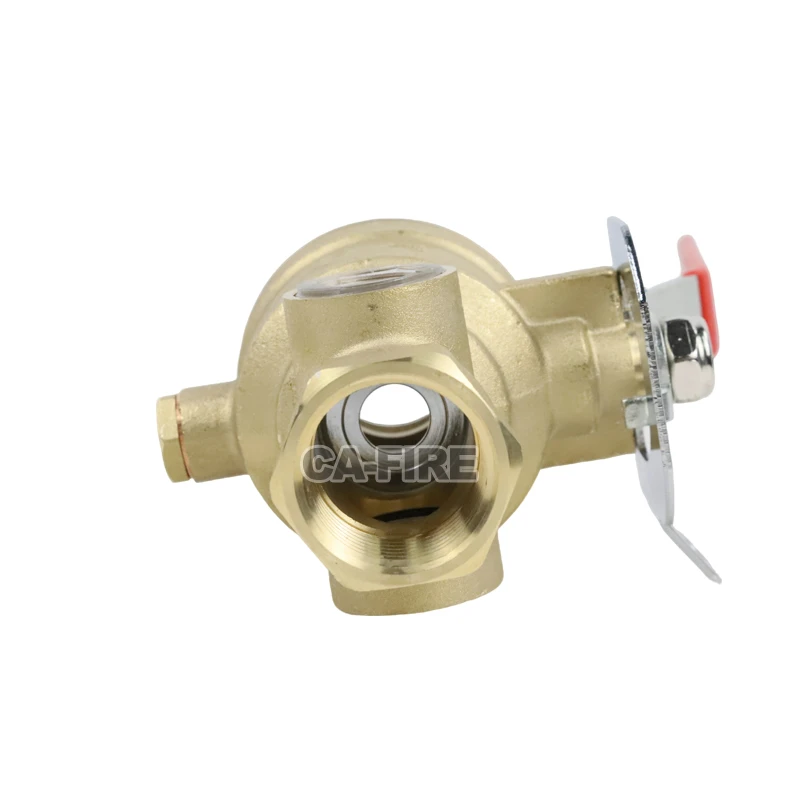


In fire protection water supply systems, drain valves serve as essential auxiliary components that ensure the long-term reliability, cleanliness, and operational readiness of the entire pipeline network. Although they do not directly participate in fire suppression, their function is critical for maintaining system integrity during standby, testing, and maintenance conditions.
One of the primary roles of a drain valve is to remove stagnant water from fire pipelines. Since fire systems remain inactive for long periods, water can accumulate in low points or dead sections of the pipeline. This stagnant water may lead to internal corrosion, sediment formation, and reduced flow efficiency over time. By enabling controlled discharge, the drain valve helps keep the system dry and clean.
Drain valves also play an important role in system maintenance and inspection procedures. During routine testing or repair work, pipelines often need to be safely emptied before components can be serviced. A properly installed drain valve allows fast and controlled water release, improving maintenance efficiency and reducing system downtime.
In addition, drain valves contribute to overall system safety by preventing pressure retention in isolated pipeline sections. Trapped pressure can create risks during maintenance operations or valve replacement. By providing a reliable discharge point, the drain valve helps eliminate residual pressure and improves operational safety for technicians.
Overall, drain valves are a small but vital part of fire protection pipeline systems. They support system hygiene, simplify maintenance operations, and ensure long-term pipeline stability, making them an important component in high-rise buildings, industrial facilities, and commercial fire protection networks.