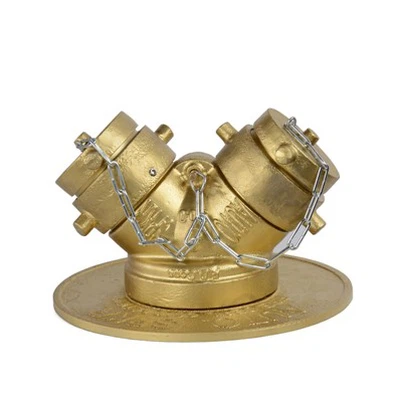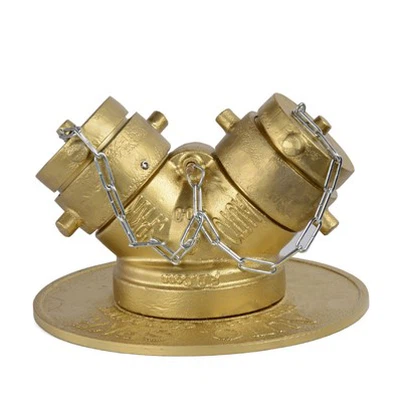


In modern fire protection systems, speed and reliability are critical factors that directly affect emergency response performance. For this reason, quick coupling systems have become widely adopted in fire hose applications, replacing many traditional threaded connection methods.
Quick couplings allow firefighters to connect and disconnect hose lines within seconds, significantly improving deployment efficiency during emergency operations. This is especially important in large-scale fire scenarios, where rapid water supply setup can help reduce fire spread and minimize damage.
Another key reason for their widespread use is operational simplicity. Firefighting environments are often high-pressure and time-sensitive, so equipment must be easy to handle even under stress. Quick couplings reduce the need for precise alignment or additional tools, making hose connection faster and more reliable in real field conditions.
In addition, modern fire protection systems increasingly emphasize standardization and compatibility. Quick coupling systems help ensure that hoses and equipment from different units or regions can be connected efficiently, improving overall system coordination during joint rescue operations.
Durability is also an important factor. Fire hose couplings are exposed to high water pressure, rough handling, and harsh environments. High-quality materials such as aluminum alloys provide a good balance of strength and weight, ensuring long-term performance without adding unnecessary operational burden.
As a result, quick couplings have become an essential component in municipal fire departments, industrial fire protection systems, and emergency rescue applications worldwide.